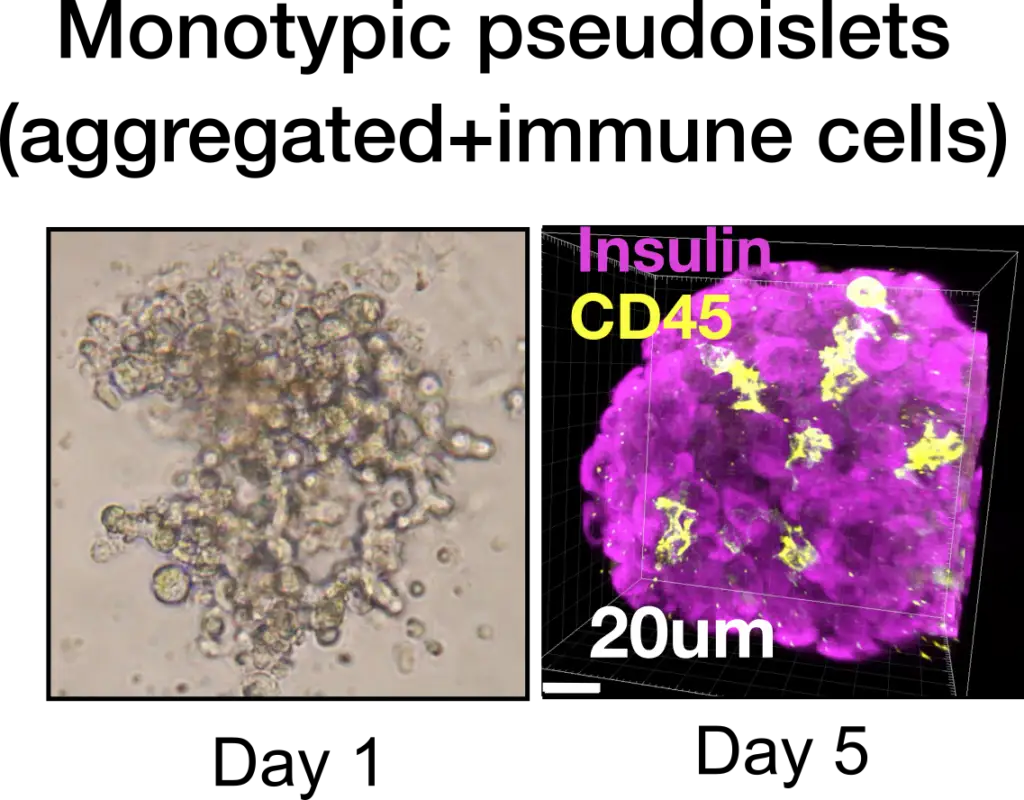




Immune cells are now known to reside within essentially all pancreatic islets, yet fundamental questions remain about what this immune presence actually means for islet biology. Who are the key cellular players, and—perhaps more importantly—what are the molecular components and signaling switches that orchestrate communication between immune and endocrine cells?
Our lab investigates the molecular outcomes of this crosstalk, focusing on islet-specific interactions between endocrine cells, such as α and β cells, and islet-associated immune populations. Rather than viewing immune presence in the islet as simply a marker of inflammation, we aim to define its normal physiological role, identify how it becomes disrupted in diabetes, and determine whether these interactions can be therapeutically targeted to protect islet health.
By mapping the specific molecular switches that mediate immune–endocrine communication, we hope to uncover new strategies for preserving β cell function and islet integrity in both type 1 and type 2 diabetes.