
The Dror Laboratory studies how immune cells, metabolic stress, inflammatory signals, chromatin regulation, and beta-cell states shape pancreatic islet function in diabetes.
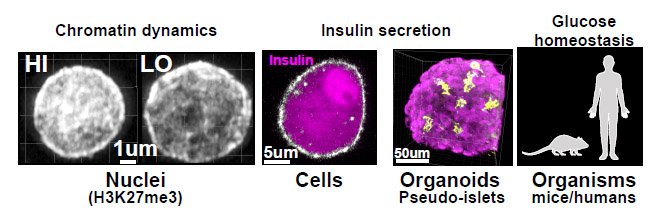
How does the pancreatic islet microenvironment change during metabolic stress, inflammation, and diabetes — and how do these changes influence beta-cell identity, insulin secretion, and disease progression?
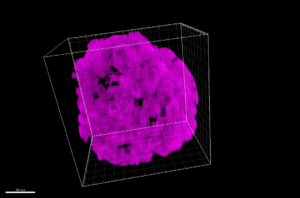
Studying how immune and metabolic signals interact inside the pancreatic islet microenvironment.
Investigating inflammatory mediators and their effects on insulin secretion, beta-cell stress, and tissue adaptation.
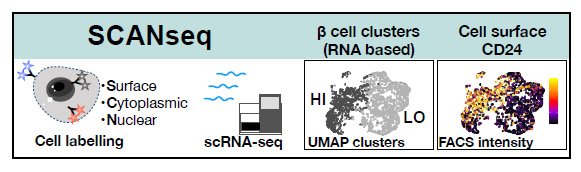
Exploring beta-cell heterogeneity and how distinct states differ in identity, function, and vulnerability.
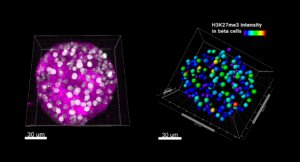
The lab investigates chromatin regulation, beta-cell identity, H3K27me3 heterogeneity, and durable cell-state programs connected to diabetes-related dysfunction.
The lab connects islet imaging, beta-cell state analysis, inflammation, and epigenetic regulation to better understand diabetes-related tissue dysfunction.
The lab combines tissue-level and single-cell approaches to study pancreatic islets from the inside out. Exact methods, model systems, and sample sources should be verified before publishing.